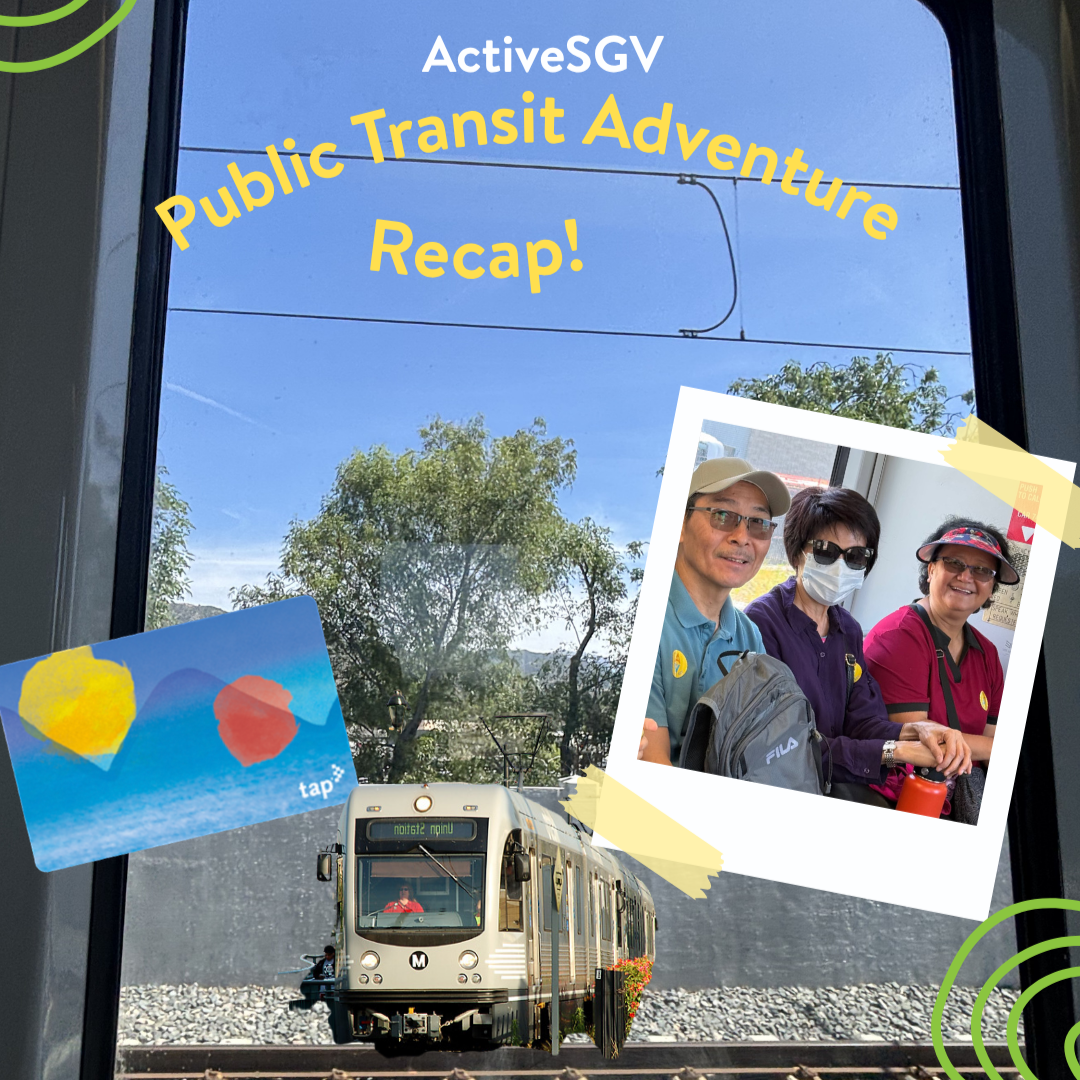
Our everyday actions shape the environment around us, especially when it comes to protecting our watersheds. To help make that connection, ActiveSGV hosted three public transit adventures to learn more about Los Angeles County’s watersheds and how our everyday decisions can affect the health of our local waterways.
Throughout these trips, participants learned how rainwater flows through our communities into storm drains, rivers, and eventually the ocean. These discussions showed how closely our transportation choices are tied to the health of our watersheds. When we rely on cars, pollutants like oil, tire particles, and brake dust build up on roads. When it rains, those pollutants are washed into storm drains, which often flow untreated into rivers and the ocean. By riding public transit, we can reduce vehicle miles traveled and practice water stewardship in a simple, everyday way.

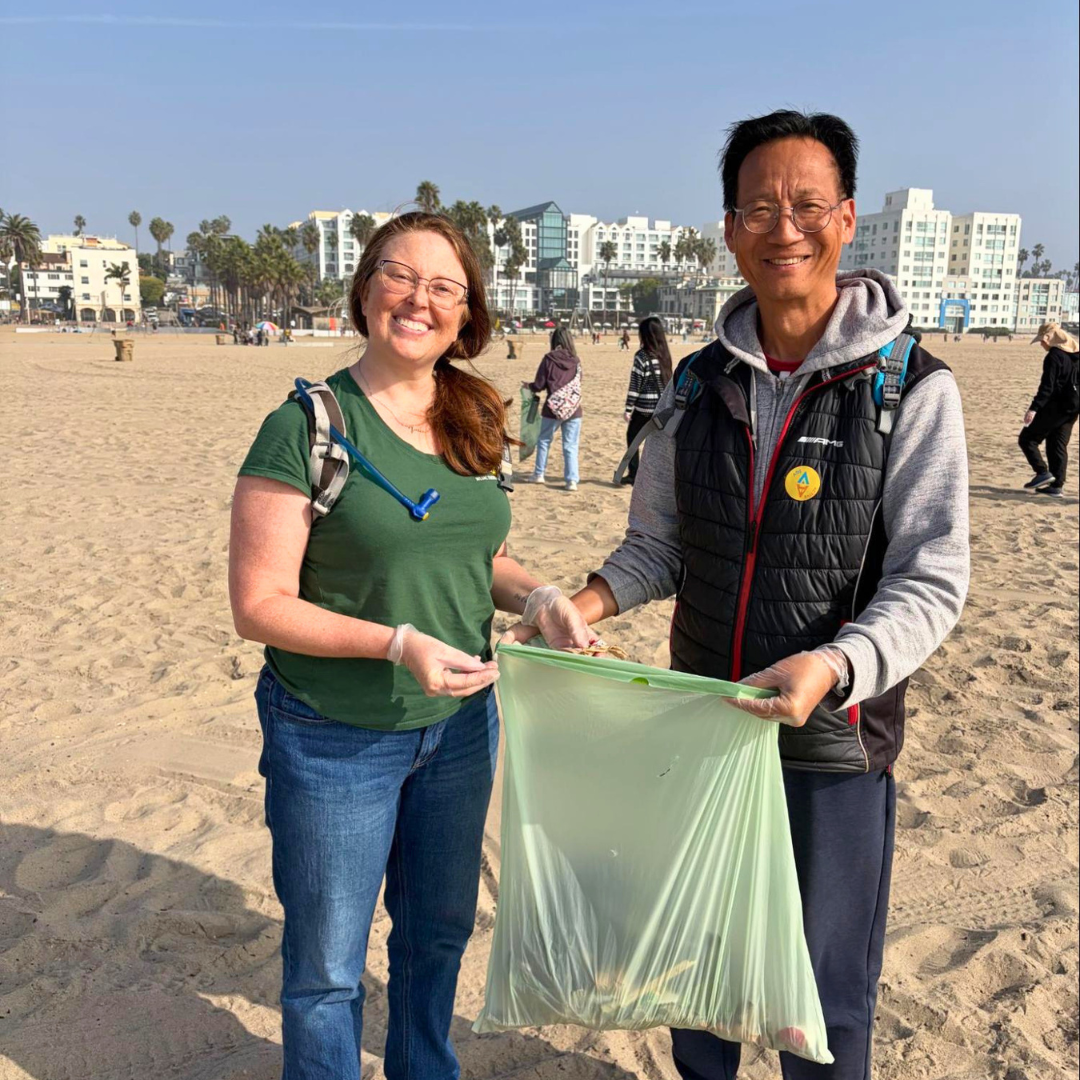
Our first public transit trip took us from Monrovia to Santa Monica. We rode the Metro A Line from Monrovia Station to Grand Ave Arts/Bunker Hill Station, then transferred to the E Line to the final stop in Santa Monica. There, we met with Luke Ginger from the Santa Monica Bay Restoration Commission to learn about current efforts to protect local watersheds. Afterwards, we led participants in a community beach clean-up, putting what they learned into immediate action.

The second trip brought us from South Pasadena to Long Beach via the Metro A Line. Once in Long Beach, we joined James Cortes from Day One on a green infrastructure walking tour and saw real solutions in action. We explored features that help capture and clean stormwater before it reaches our waterways, and learned how projects like these can reduce pollution, support cleaner beaches, and make streets safer and more comfortable for walking.

On our final transit adventure, we took the Metro A Line from Arcadia to Glendora. From there, we walked to South Hills Park and discussed local stormwater capture efforts in the City of Glendora. Then, the group completed a two-mile hike along the South Hills Wilderness Trail. This trip highlighted how natural spaces in the San Gabriel Valley can be accessible by public transit.

For many participants, these transit adventures were their first time riding public transportation. Many shared positive feedback about the convenience of traveling without a car. The trips helped build participants’ confidence in using transit and highlighted it as a practical, more sustainable option for getting around. We look forward to seeing more SGV community members protect our watersheds and environment by taking public transit.

The SGV Water Action Program is funded by the Safe, Clean Water Program’s Public Education & Community Engagement Program and administered by the Water Foundation, ensuring ongoing support for environmental initiatives.